February in Japan is marked by Setsubun, a seasonal festival held at the beginning of spring according to the traditional calendar. While it is not as internationally famous as cherry blossom season, Setsubun offers visitors a rare opportunity to experience everyday Japanese beliefs, rituals, and seasonal awareness.
If you are traveling to Miyajima or Hiroshima in early February, Setsubun is a meaningful cultural experience worth discovering.
What Is Setsubun?
Setsubun means “seasonal division.” Historically, Japanese people believed that the change of seasons—especially the transition from winter to spring—was a time when misfortune and illness could enter daily life.
To protect themselves, people developed rituals to drive away evil spirits, cleanse bad luck, and welcome good fortune for the coming season.
Oni and Fuku: The Symbolism of Setsubun
- Oni (demons) – illness, disasters, and bad luck
- Fuku (good fortune) – happiness, health, and prosperity
Setsubun rituals are designed to push oni away and invite fuku into homes and communities.
Mamemaki: Bean-Throwing Ritual
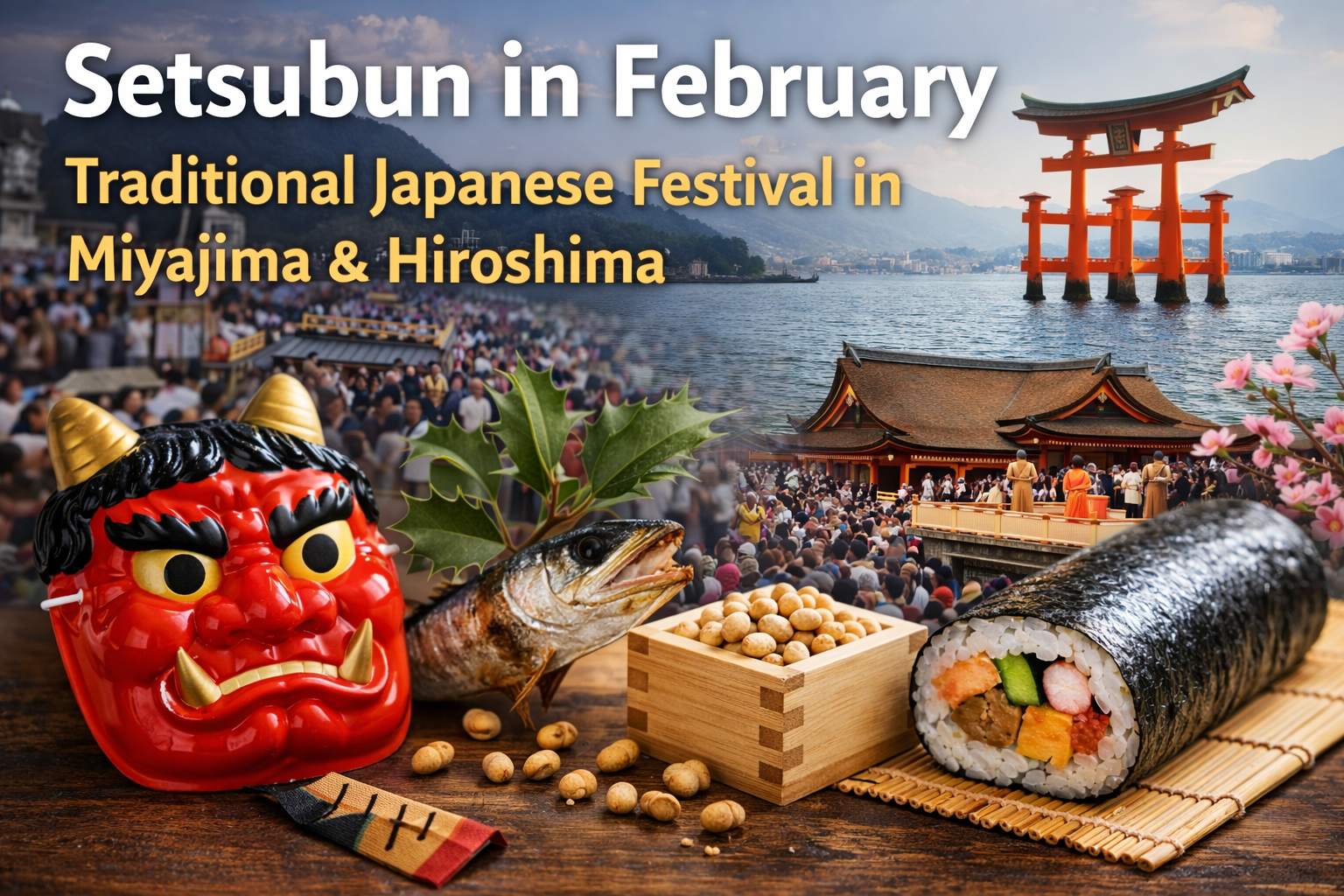
The most iconic Setsubun custom is Mamemaki, or bean throwing. Roasted soybeans are thrown while shouting:
Oni wa soto! Fuku wa uchi!
(Demons out! Good fortune in!)
Beans symbolize vitality and life. Roasted beans are used because they cannot sprout, meaning evil will not return.
Eating Beans for Good Health
After bean throwing, people eat roasted soybeans equal to their age, or sometimes one extra bean for the coming year.
This custom is believed to bring good health, protection from illness, and longevity. For children it is playful; for adults it becomes a quiet moment of reflection on the year ahead.
Hiiragi Iwashi: Sardine Head and Holly
Another traditional but lesser-known custom is Hiiragi Iwashi. On Setsubun night, some households place a grilled sardine head and a branch of holly at their entrance.
- The strong smell of sardines is believed to repel evil spirits
- The sharp holly leaves symbolically prevent demons from entering
This reflects how Japanese culture uses ordinary objects as protective symbols rooted in seasonal belief.
Ehomaki: Sushi Roll for Good Luck
Ehomaki is a thick sushi roll eaten on Setsubun night. Traditionally, people face the year’s lucky direction, eat silently, do not cut the roll, and finish it in one go.
Although this custom became widespread only in recent decades, it is now easy for travelers to enjoy thanks to supermarkets and convenience stores.
Where to Experience Setsubun in Miyajima & Hiroshima
Daisho-in Temple (Miyajima)
Daisho-in is one of Miyajima’s most important Buddhist temples. Around Setsubun, the temple holds a traditional ceremony with prayers and bean throwing by monks.
Official website:
https://daisho-in.com/
Itsukushima Shrine (Miyajima)
Famous for its floating torii gate, Itsukushima Shrine is a UNESCO World Heritage Site. Depending on the year, Setsubun-related rituals may be performed, though large public bean throwing is not guaranteed annually.
Official website:
https://www.itsukushimajinja.jp/
Hiroshima Gokoku Shrine (Hiroshima City)
Located next to Hiroshima Castle, Hiroshima Gokoku Shrine hosts an annual Setsubun Festival with lively bean throwing. Its central location makes it especially accessible for visitors.
Official website:
https://www.h-gokoku.or.jp/
Mitaki-dera Temple (Hiroshima City)
Surrounded by forested hills, Mitaki-dera offers a quieter and more local atmosphere. In some years, a Setsubun ceremony is held here.
Official website:
https://mitakidera.net/
Travel Tips for Visitors
- Setsubun usually falls on February 2 or 3
- Event schedules vary each year
- Please check official websites before visiting
- Respect photography rules at temples and shrines
Dates and details of Setsubun events may change each year. Please check official websites for the latest information.
Why Setsubun Matters
Setsubun shows how Japanese culture values seasonal transitions, symbolic rituals, health, and quiet traditions practiced in daily life. For travelers visiting Japan in February, it offers an intimate look at customs locals still cherish today.