Best Time to Visit Miyajima: High Tide or Low Tide?
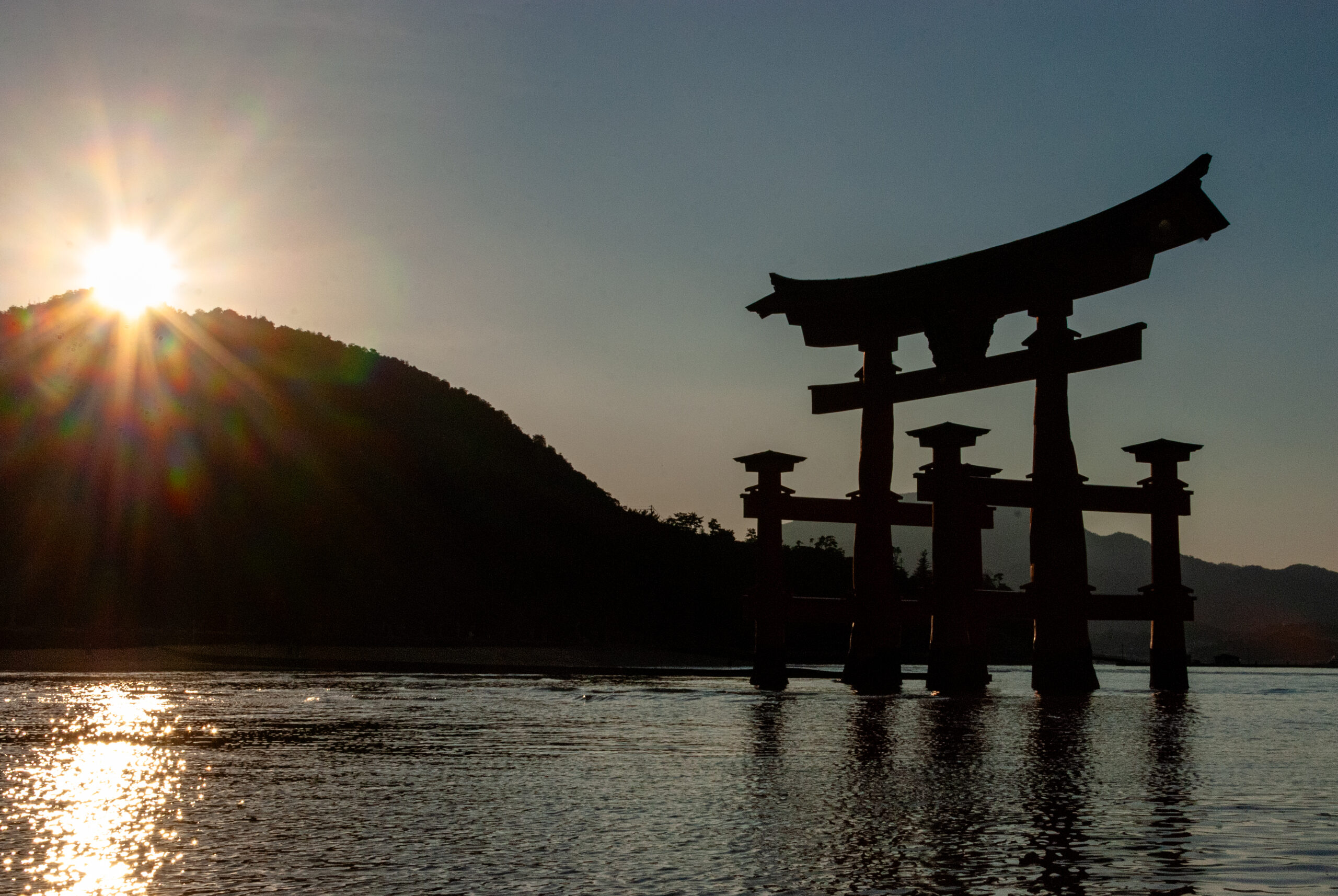
Miyajima is not just one destination. It is a place that quietly transforms throughout the day. At high tide, the torii gate floats above the sea. At low tide, you can walk across the sand and stand beside it.
If you are planning a visit to Itsukushima Shrine, understanding the tide is the key to experiencing Miyajima at its best.
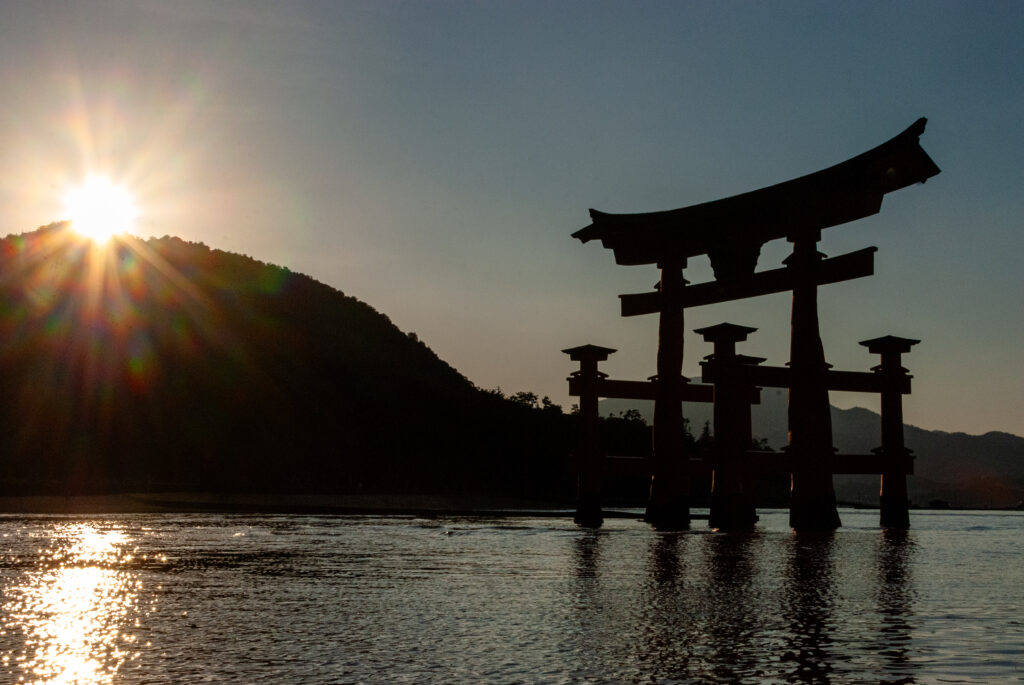
Miyajima at sunset offers one of the most atmospheric views in Japan.
Why the tide matters
The great torii stands just offshore, which means the entire atmosphere of Miyajima changes with the sea level. In only a few hours, the island can feel completely different. That is why checking the tide before your visit is so important.
- At high tide, the torii appears to float gracefully on the water.
- At low tide, the sea pulls back and reveals the sand below.
- Between the two, the scenery changes quietly and continuously.
“Checking the tide before your visit is one of the easiest ways to turn a good trip into a memorable one.”
High tide vs low tide: which is better?
- At high tide, the torii appears to float gracefully on the water.
- At low tide, the sea pulls back and reveals the sand below.
- Between the two, the scenery changes quietly and continuously.
Checking the tide before your visit is the simplest way to turn a good trip into a memorable one.
Check Miyajima Tide Times
For the best experience, check the tide time for the exact day of your visit.
To plan your visit, check the tide times in advance. The view of the torii gate changes dramatically depending on the tide.
👉 Check Miyajima tide times (simple view)
For more details:
High tide vs low tide
| Experience | High Tide | Low Tide |
|---|---|---|
| View | Floating torii | Walk to the gate |
| Photos | Classic | Unique |
| Experience | Visual | Physical |
| Atmosphere | Elegant | Open |
Recommendation: if this is your first visit to Miyajima, high tide is usually the best choice. It gives you the most iconic view of the shrine and torii. If your schedule allows, however, seeing both high tide and low tide is the ideal experience.
The beauty of high tide
At high tide, the water rises around the shrine and the vermilion torii stands above the sea. This is the Miyajima that many travelers imagine before they arrive. The view is graceful, photogenic, and unmistakably iconic.
- Perfect for the classic floating-torii view
- Especially beautiful in soft morning light or near sunset
- Best for first-time visitors and postcard-style photography
The beauty of low tide
At low tide, the sea retreats and wide sand flats appear beneath the gate. You can walk all the way to the torii and experience its scale up close. It feels less distant and more physical, giving Miyajima a completely different character.
- Best if you want to walk right up to the gate
- Ideal for travelers who enjoy a more hands-on experience
- A great contrast to the floating view at high tide
Best time of day to visit
- Morning: quieter, softer light, and fewer visitors
- Late afternoon: warmer tones and a calmer atmosphere
- Sunset: one of the most dramatic times to see Miyajima
- Evening: a peaceful and completely different mood
For many travelers, the most memorable plan is to arrive in the afternoon, enjoy the shrine and torii in changing light, and stay into the evening.
Night at Miyajima
After sunset, Miyajima becomes quieter and more reflective. The illuminated torii gate creates a completely different mood from daytime. If your schedule allows, staying until evening reveals another side of the island — calmer, darker, and deeply atmospheric.
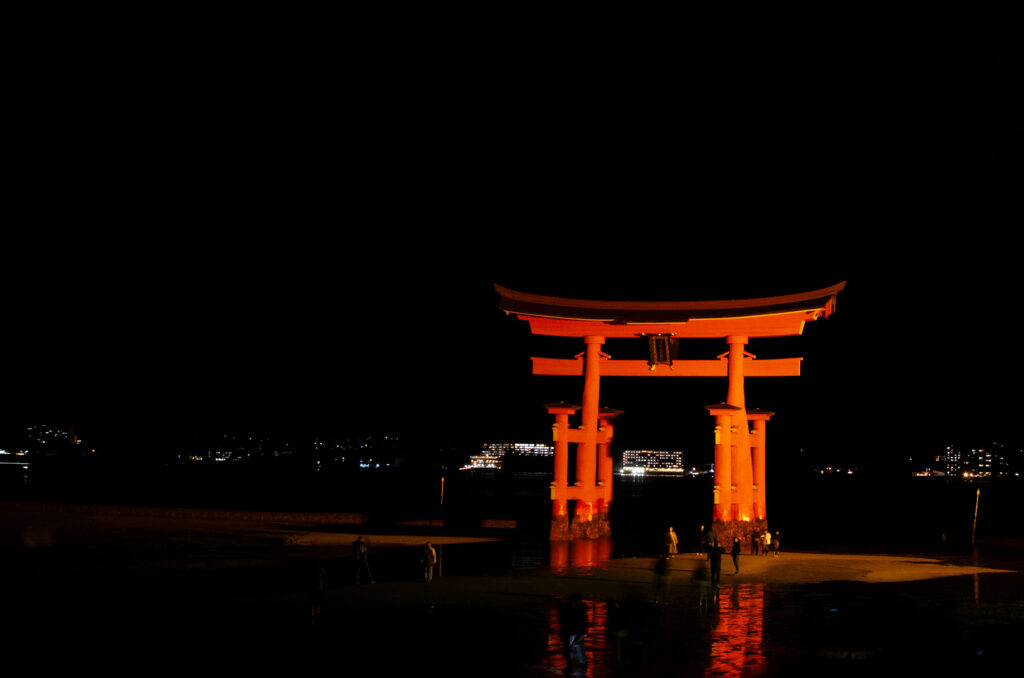
Staying until evening lets you experience a quieter and more atmospheric side of Miyajima.
A simple one-day plan
- Arrive in the afternoon
- Visit Itsukushima Shrine and the waterfront
- Check whether you are seeing high tide or low tide
- Explore Omotesando shopping street and nearby cafés
- Return to the torii area as the light changes
- Stay into the evening for a quieter and more memorable atmosphere
Frequently asked questions
s high tide or low tide better for Miyajima?
High tide is usually better for the most iconic view. Low tide is better if you want to walk right up to the torii gate.
Can you walk to the torii gate?
Yes. At low tide, the sand is exposed and you can walk directly to the base of the gate.
Is Miyajima worth visiting in the evening?
Yes. Evening offers a quieter atmosphere and a very different mood from daytime, especially when the torii is illuminated.
How long should I stay on Miyajima?
A few hours is enough for a short visit, but staying longer lets you experience how dramatically the island changes with the tide and the light.
Final thoughts
The real charm of Miyajima is not simply choosing between high tide and low tide. It is seeing how much the island can change within just a few hours.
At one moment, the torii floats on the sea in warm evening light. Later, it stands illuminated against the darkness. Few places offer such a dramatic transformation in a single visit.
If possible, plan your trip so that you can experience Miyajima through changing tide and changing light. That is when the island becomes truly unforgettable.