Japan’s New Year season is completely different from Christmas or Western-style countdown parties. It is calm, spiritual, and deeply connected to family traditions and centuries-old rituals. If you are visiting Japan—especially Hiroshima, Setouchi, or Miyajima—knowing these customs will make your trip far more meaningful.
This guide explains the Japanese New Year in a simple way, highlighting things most travelers have never heard of.
1. Hatsumode: The First Shrine or Temple Visit of the Year
Hatsumode is one of Japan’s most important New Year traditions. People visit a shrine or temple between January 1st and 3rd to pray for good fortune.
Shrine vs. Temple (A common point of confusion)
- Shrine (Shinto): You will see a torii gate, sacred ropes, and offerings to deities.
- Temple (Buddhism): Features statues of Buddha and large bells.
On Miyajima, you can experience both: Itsukushima Shrine (Shinto) and Daiganji Temple (Buddhist).
How to Pray at a Shrine
- Purify your hands and mouth at the water basin.
- At the main hall:
- Bow twice
- Clap twice
- Make your wish
- Bow once more
When to Visit
- January 1st morning is extremely crowded.
- Late night on Jan 1st or early morning on Jan 2nd is much quieter and ideal for photos.
2. Omikuji, Omamori, and Japanese “Good Fortune” Culture
Omikuji (Paper Fortune)
- Daikichi (great blessing) is the best.
- Bad fortunes are tied to a rack at the shrine to “leave the bad luck behind.”
Omamori (Good-Luck Charms)
- Charms for love, studies, business success, health, and safe travel.
- Popular souvenirs because each one has a specific blessing.
The Zodiac Animals (Eto)
- Each year corresponds to one of twelve animals.
- New Year decorations and souvenirs feature the year’s zodiac animal.
3. New Year Foods: Meaning Behind Every Dish
Osechi Ryori
Traditional New Year dishes, each with symbolic meaning:
- Black beans → health and hard work
- Kazunoko → prosperity for future generations
- Tazukuri → a good harvest
- Kombu rolls → “joy” (a wordplay in Japanese)
Zoni (Rice Cake Soup)
Each region has its own style. In Hiroshima and the Setouchi area, clear broth with round mochi is common.
Otoso (Spiced New Year’s Sake)
This herbal sake is believed to ward off evil spirits and bring good health for the coming year.
4. Traditions That Surprise Most Travelers
New Year Decorations
- Shimenawa: welcoming the New Year deity
- Kadomatsu: guiding the deity to the home
- Kagami-mochi: an offering for good fortune
Year-End Cleaning (Oosouji)
Japanese families clean the entire home before New Year to purify the space.
Many Shops Are Closed
- On January 1st, many restaurants and stores close nationwide.
- Plan ahead—especially in regional areas like Hiroshima and the islands.
A Quiet New Year’s Eve
- Families eat toshikoshi soba (buckwheat noodles for longevity).
- They watch TV together instead of attending loud countdown parties.
Joya no Kane
Temples ring a giant bell 108 times to symbolize the cleansing of earthly desires.
5. Experiencing New Year in Setouchi & Miyajima
The First Sunrise of the Year
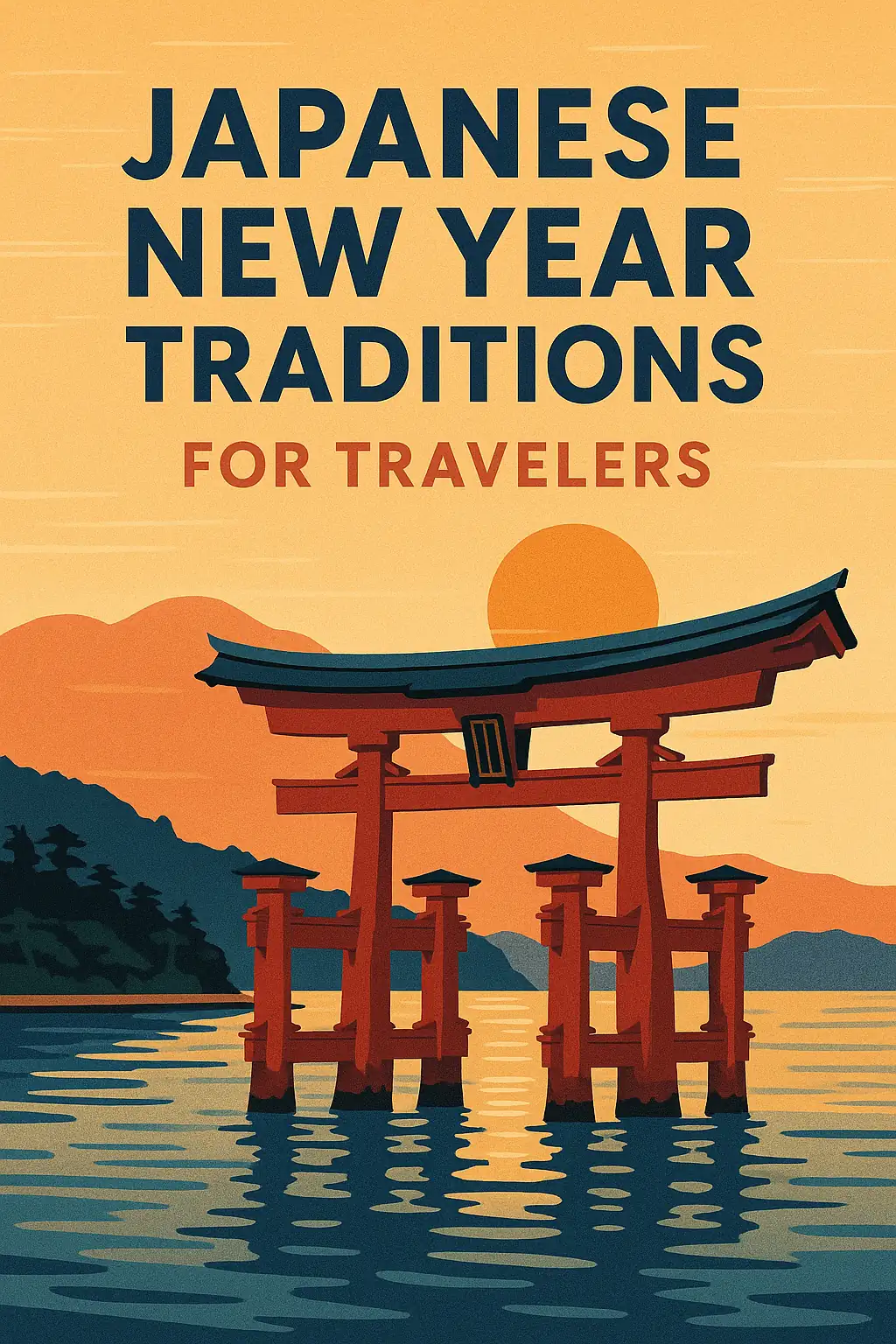
Watching the first sunrise (hatsuhinode) behind the Great Torii Gate is breathtaking. The view changes dramatically depending on the tide.
Hatsumode at Itsukushima Shrine
- Crowded on January 1st, but quieter at night or early morning.
- At low tide, visitors can walk toward the torii gate.
Winter Foods in Setouchi
- Hiroshima oysters (peak season)
- Anago-meshi (grilled conger eel rice bowl)
- Setouchi lemon dishes
Conclusion
Japanese New Year is spiritual, family-centered, and full of traditions dating back centuries. Understanding these customs helps travelers appreciate Japan on a much deeper level—especially when visiting Hiroshima, Setouchi, and Miyajima during the holiday season.